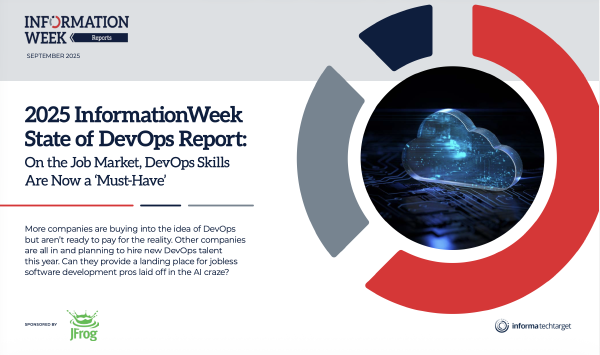
The latest ‘2025 State of DevOps Report’ reveals that DevOps skills have become an essential requirement for career survival. 40% of enterprises list them as “must-have,” with another 43% indicating they will soon be mandatory. Employers value practical experience more than training certifications. Despite the high popularity of AIOps and DevSecOps, their actual implementation is still in its early stages.
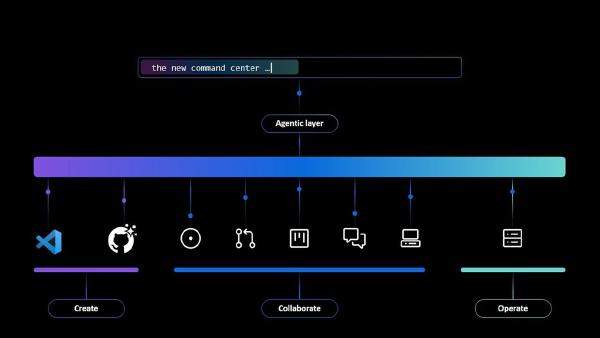
Recently, I encountered a related but more advanced concept—Agentic DevOps. After spending time reading Microsoft Azure’s introductions, GitHub’s latest documentation, and some open-source practices, I compiled these notes. The purpose is to document my learning process and provide reference for colleagues. The following content is based on publicly available information and my understanding, without any exaggerated predictions.
After a month of intermittent development and testing, I have finally completed this major update. This is the biggest update Commit Check has received since its inception.
How to assess and improve your team’s DevOps maturity. Official release of the DevOps Maturity open source project, with assessment tools and practical guides.
In Jenkins, the disableConcurrentBuilds option is used to manage concurrent builds. This article explains how to conditionally set the abortPrevious value based on the branch being built, allowing for more flexible build management.
In DevOps, CI/CD pipelines require continuous maintenance and refactoring. This article explores why CI/CD is not a one-time construction project, but a system that requires long-term investment and continuous evolution.
This article discusses the optimizations made during the Jenkins upgrade, including using Docker Compose for deployment, refactoring the Jenkins Shared Library, introducing Windows Docker Containers, and more to enhance the efficiency and security of the CI/CD process.
This article explains how to resolve the “hidden symbol `__gcov_init’ in ../libgcov.a(_gcov.o) is referenced by DSO” error when building a project with Gcov, including how to ensure symbols are not hidden.
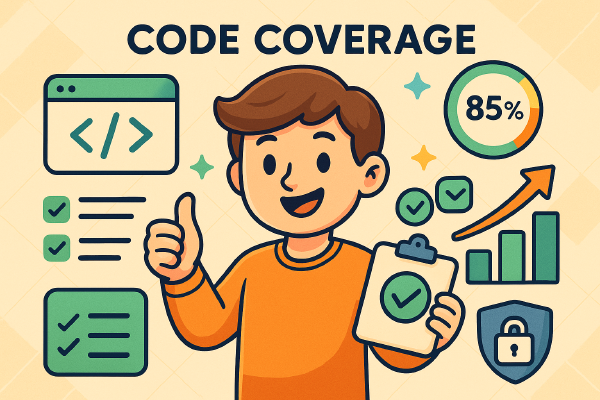
This article briefly introduces the concept, importance, common metrics, working principle, and mainstream tools of code coverage, emphasizing that code coverage metrics should not be over-relied upon.
This article explains how to backup Jenkins using the ThinBackup plugin and shell scripts, ensuring that your Jenkins configuration and build data are safely stored.
Discusses three best practices for Jenkins: Configuration as Code, Shared Libraries, and Multi-Branch Pipeline, highlighting their benefits in terms of transparency, traceability, and self-service builds.
A record of my experience attending the JFrog DevOps training camp in Beijing, sharing training content, personal feelings, and reflections on future work.