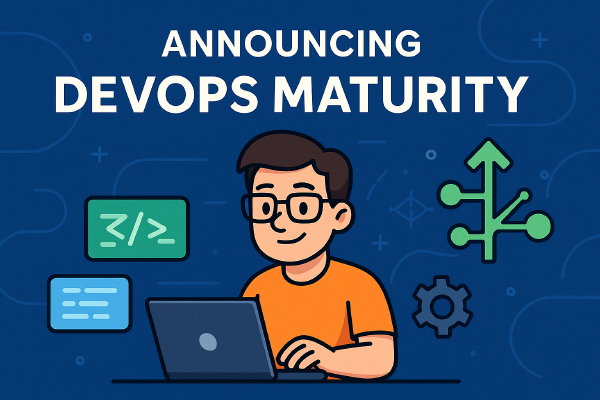
Under the dual pressures of the AI wave and layoffs, how can developers secure their “rice bowls”?
The latest ‘2025 State of DevOps Report’ provides a clear answer: DevOps skills have become an essential requirement for career survival.
I. New Workplace Trend: DevOps Skills Become an “Entry Threshold”#
Facing the wave of layoffs in recent years, developers might feel uncertain about their future. However, the ‘2025 InformationWeek State of DevOps Report,’ sponsored by JFrog, indicates that enterprise demand for DevOps talent remains strong.
- Becoming Essential: 40% of surveyed enterprises state that DevOps experience is a “must-have” for new hires in development and management roles, with another 43% indicating it will soon become mandatory.
- Experience Over Certifications: Compared to training certifications (61%), employers prioritize applicants’ practical experience (76%). This means the ability to solve real production problems is more competitive than mere theoretical learning.
II. Implementation Challenges: Shifting from “Why Do It” to “How to Do It”#
The report points out that the promotion of DevOps is facing a shift in challenges, from “Return on Investment (ROI)” to “organizational complexity.”
- Biggest Obstacle: 41% of respondents believe “lack of implementation resources” is the primary reason for not adopting DevOps.
- Evolving Challenges: The proportion who believe “difficulty in proving ROI” decreased from 25% in 2023 to 14%, while “organizational complexity” surged from 26% to 43%. This indicates that enterprises have recognized the value of DevOps but are deeply mired in the quagmire of organizational structure and processes.
III. AI and Security: High Hopes, Harsh Reality#
Despite the high popularity of AIOps and DevSecOps, their actual implementation is still in its early stages.
- AIOps Still Under Observation: While 39% of enterprises are discussing or planning AIOps, only 5% have fully implemented it currently.
- DevSecOps Pressure: Security integration is paramount. When faced with vulnerabilities like Log4Shell, 39% of enterprises can pinpoint the responsible team within hours. However, nearly half of enterprises admit to having released code with known vulnerabilities due to time pressure.
- Who Manages AI Infrastructure? 50% of respondents believe that IT teams will bear the responsibility for supporting AI/ML model development in the next two years, while 36% of the pressure falls on DevOps teams.
IV. Open Source Software: Unignorable Supply Chain Risks#
As the sponsor of the report, JFrog provided deep insights into open-source security:
- Open Source Everywhere: 96% of commercial applications contain open-source components.
- Attacks Surge: Software supply chain attacks have surged by 600% in the past three years.
- Shift Left Security: JFrog emphasizes that security cannot be the last step before release; it must be woven into every stage of development through automated scanning, binary file verification, and other means.
Conclusion: Embrace Change, Stay Competitive#
DevOps is not just a stack of tools; it’s a shift in culture and mindset. For enterprises, breaking down departmental silos and optimizing organizational structures are key to large-scale implementation. For individuals, accumulating practical DevOps experience in production environments will be your strongest moat against future uncertainties.