
Recent
A Three-Year Community Pain Point—I Put Hadolint on PyPI, Ending Manual Installation
Hadolint’s pre-commit integration has long lacked an automatic installation solution, a problem that has plagued the community for three years. This article explains how, by packaging the Hadolint binary into a Python Wheel and publishing it to PyPI, pre-commit can integrate Hadolint with a single command, just like any Python tool, completely eliminating the burden of manual downloads and environment configuration.

How to Claim the 'Lottery Ticket' of Open Source—Starting from thanks.dev's Operational Mechanism
In the previous article, I wrote about receiving a donation from Canonical, and a reader asked: How did you get selected?
At first, I didn’t fully understand it either. Later, after carefully studying thanks.dev’s operational mechanism, I finally figured out the underlying logic of the whole thing—and what kind of projects are more likely to be funded by downstream vendors.
Thanks to Canonical’s Generous Donation—badgepy Continues as Free and Open Source
Today, I unexpectedly discovered that Canonical has been donating to me via thanks.dev for four consecutive months to support the development of badgepy. Although the amount is small, this feedback means a lot to me. It made me realize that sometimes, if we just keep doing the right thing without worrying too much about rewards, the results might come back to us in a warm and unexpected way, from a place we never anticipated.
Job Search—Why the "Nuclear Weapon" Strategy Might Be the Winning Formula for 2026
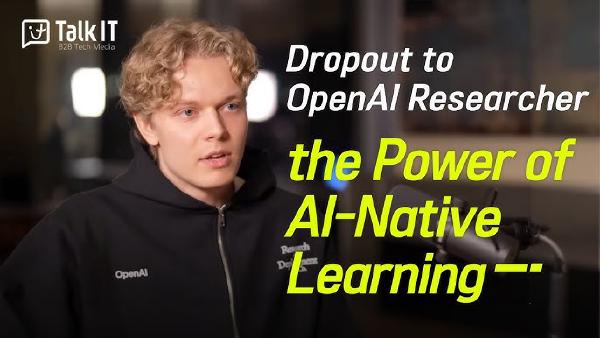
Today’s job market values practical skills and the ability to create value more than ever before, rather than just academic qualifications. This post shares the story of a high school dropout who successfully joined OpenAI through self-study and actively creating opportunities, and why directly showcasing your “nuclear weapon” achievements might be the most effective strategy for job searching.
GitStats 2.0—New UI and Chart Engine, Revitalizing Your Git Repository History Data
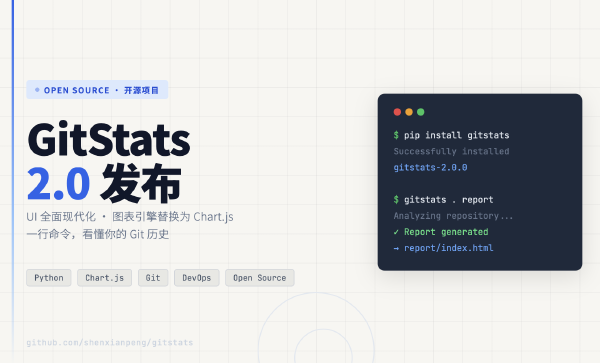
I recently undertook a major UI redesign for the open-source project GitStats, adding dark/light mode toggle, responsive adaptation, and a modernized visual design, making the reports look like a real product.

Don't Learn OpenClaw—It Won't Last the Year
OpenClaw is a great idea, but it won’t be a great solution. High costs, security risks, big tech competition, and a lack of user education—these four obstacles combined make it difficult to sustain a long-term prosperous ecosystem.
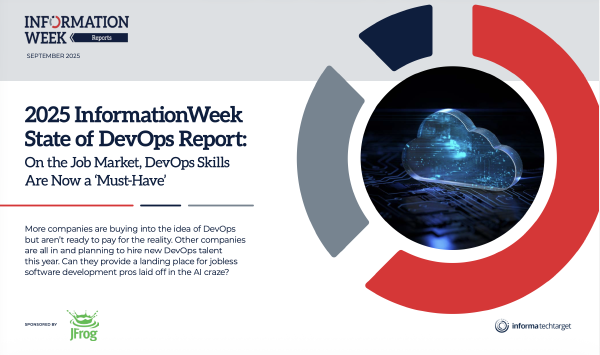
2025 DevOps State of the Report—Skills are No Longer a Bonus, but a 'Must-Have'!
The latest ‘2025 State of DevOps Report’ reveals that DevOps skills have become an essential requirement for career survival. 40% of enterprises list them as “must-have,” with another 43% indicating they will soon be mandatory. Employers value practical experience more than training certifications. Despite the high popularity of AIOps and DevSecOps, their actual implementation is still in its early stages.
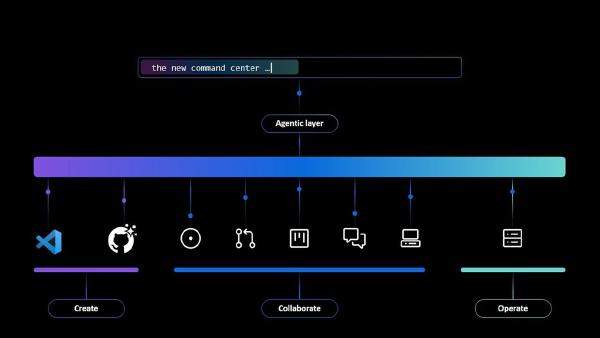
Exploring Agentic DevOps—GitHub Agentic Workflow and Practical Observations of Continuous AI
Recently, I encountered a related but more advanced concept—Agentic DevOps. After spending time reading Microsoft Azure’s introductions, GitHub’s latest documentation, and some open-source practices, I compiled these notes. The purpose is to document my learning process and provide reference for colleagues. The following content is based on publicly available information and my understanding, without any exaggerated predictions.
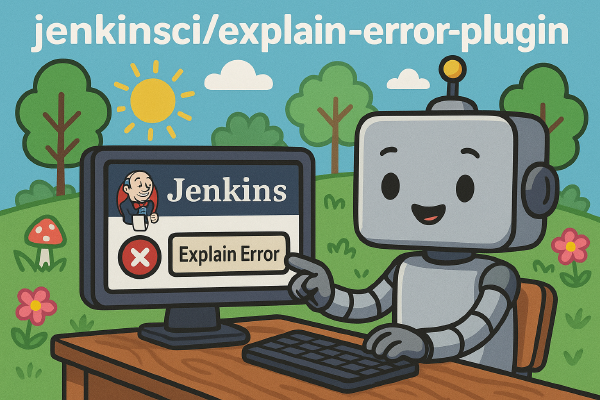
Explain Error Plugin Adds Two Major Enterprise Features—Custom Context and Folder-Level Configuration
The Explain Error Plugin introduces two significant updates: support for custom context information and folder-level AI provider configurations. These two features make the plugin more flexible and robust for use in enterprise environments.
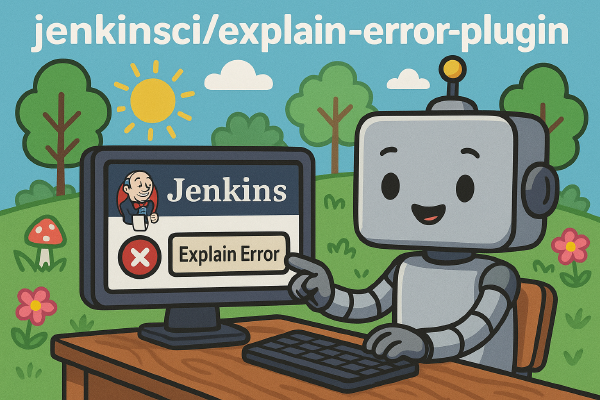
Explain Error Plugin Updated Again—Two Practical New Features from User Feedback
Recently, I received some user feedback, and I immediately enhanced the Explain Error Plugin, adding two very practical features: support for specifying the language of the explanation content output and support for obtaining AI return values in Pipeline.
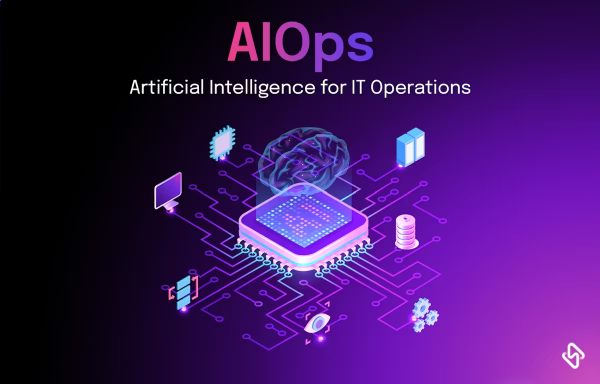
What is AIOps—A Systematic Introduction to Intelligent Operations
Today, with the widespread adoption of microservices, hybrid clouds, and containerized deployments, IT systems have become exceptionally complex. When thousands of alert messages flood in, traditional operations models struggle. AIOps (Artificial Intelligence for IT Operations), an AI-driven transformation, is emerging as the “lifeline” for IT operations management. This article combines key insights from IBM, ServiceNow, GitHub, and Red Hat to provide a comprehensive overview of AIOps.

One Month Back Home—I Didn't Do Anything 'Big'
A record of my thoughts and feelings during my visit home for Chinese New Year 2026.
A Three-Year Community Pain Point—I Put Hadolint on PyPI, Ending Manual Installation
Hadolint’s pre-commit integration has long lacked an automatic installation solution, a problem that has plagued the community for three years. This article explains how, by packaging the Hadolint binary into a Python Wheel and publishing it to PyPI, pre-commit can integrate Hadolint with a single command, just like any Python tool, completely eliminating the burden of manual downloads and environment configuration.
How to Claim the 'Lottery Ticket' of Open Source—Starting from thanks.dev's Operational Mechanism
In the previous article, I wrote about receiving a donation from Canonical, and a reader asked: How did you get selected?
At first, I didn’t fully understand it either. Later, after carefully studying thanks.dev’s operational mechanism, I finally figured out the underlying logic of the whole thing—and what kind of projects are more likely to be funded by downstream vendors.
Thanks to Canonical’s Generous Donation—badgepy Continues as Free and Open Source
Today, I unexpectedly discovered that Canonical has been donating to me via thanks.dev for four consecutive months to support the development of badgepy. Although the amount is small, this feedback means a lot to me. It made me realize that sometimes, if we just keep doing the right thing without worrying too much about rewards, the results might come back to us in a warm and unexpected way, from a place we never anticipated.
Job Search—Why the "Nuclear Weapon" Strategy Might Be the Winning Formula for 2026
Today’s job market values practical skills and the ability to create value more than ever before, rather than just academic qualifications. This post shares the story of a high school dropout who successfully joined OpenAI through self-study and actively creating opportunities, and why directly showcasing your “nuclear weapon” achievements might be the most effective strategy for job searching.
GitStats 2.0—New UI and Chart Engine, Revitalizing Your Git Repository History Data
I recently undertook a major UI redesign for the open-source project GitStats, adding dark/light mode toggle, responsive adaptation, and a modernized visual design, making the reports look like a real product.
Don't Learn OpenClaw—It Won't Last the Year
OpenClaw is a great idea, but it won’t be a great solution. High costs, security risks, big tech competition, and a lack of user education—these four obstacles combined make it difficult to sustain a long-term prosperous ecosystem.
2025 DevOps State of the Report—Skills are No Longer a Bonus, but a 'Must-Have'!
The latest ‘2025 State of DevOps Report’ reveals that DevOps skills have become an essential requirement for career survival. 40% of enterprises list them as “must-have,” with another 43% indicating they will soon be mandatory. Employers value practical experience more than training certifications. Despite the high popularity of AIOps and DevSecOps, their actual implementation is still in its early stages.
Exploring Agentic DevOps—GitHub Agentic Workflow and Practical Observations of Continuous AI
Recently, I encountered a related but more advanced concept—Agentic DevOps. After spending time reading Microsoft Azure’s introductions, GitHub’s latest documentation, and some open-source practices, I compiled these notes. The purpose is to document my learning process and provide reference for colleagues. The following content is based on publicly available information and my understanding, without any exaggerated predictions.
Explain Error Plugin Adds Two Major Enterprise Features—Custom Context and Folder-Level Configuration
The Explain Error Plugin introduces two significant updates: support for custom context information and folder-level AI provider configurations. These two features make the plugin more flexible and robust for use in enterprise environments.
Explain Error Plugin Updated Again—Two Practical New Features from User Feedback
Recently, I received some user feedback, and I immediately enhanced the Explain Error Plugin, adding two very practical features: support for specifying the language of the explanation content output and support for obtaining AI return values in Pipeline.
What is AIOps—A Systematic Introduction to Intelligent Operations
Today, with the widespread adoption of microservices, hybrid clouds, and containerized deployments, IT systems have become exceptionally complex. When thousands of alert messages flood in, traditional operations models struggle. AIOps (Artificial Intelligence for IT Operations), an AI-driven transformation, is emerging as the “lifeline” for IT operations management. This article combines key insights from IBM, ServiceNow, GitHub, and Red Hat to provide a comprehensive overview of AIOps.
One Month Back Home—I Didn't Do Anything 'Big'
A record of my thoughts and feelings during my visit home for Chinese New Year 2026.
A Three-Year Community Pain Point—I Put Hadolint on PyPI, Ending Manual Installation
Hadolint’s pre-commit integration has long lacked an automatic installation solution, a problem that has plagued the community for three years. This article explains how, by packaging the Hadolint binary into a Python Wheel and publishing it to PyPI, pre-commit can integrate Hadolint with a single command, just like any Python tool, completely eliminating the burden of manual downloads and environment configuration.
How to Claim the 'Lottery Ticket' of Open Source—Starting from thanks.dev's Operational Mechanism
In the previous article, I wrote about receiving a donation from Canonical, and a reader asked: How did you get selected?
At first, I didn’t fully understand it either. Later, after carefully studying thanks.dev’s operational mechanism, I finally figured out the underlying logic of the whole thing—and what kind of projects are more likely to be funded by downstream vendors.
Thanks to Canonical’s Generous Donation—badgepy Continues as Free and Open Source
Today, I unexpectedly discovered that Canonical has been donating to me via thanks.dev for four consecutive months to support the development of badgepy. Although the amount is small, this feedback means a lot to me. It made me realize that sometimes, if we just keep doing the right thing without worrying too much about rewards, the results might come back to us in a warm and unexpected way, from a place we never anticipated.
Job Search—Why the "Nuclear Weapon" Strategy Might Be the Winning Formula for 2026
Today’s job market values practical skills and the ability to create value more than ever before, rather than just academic qualifications. This post shares the story of a high school dropout who successfully joined OpenAI through self-study and actively creating opportunities, and why directly showcasing your “nuclear weapon” achievements might be the most effective strategy for job searching.
GitStats 2.0—New UI and Chart Engine, Revitalizing Your Git Repository History Data
I recently undertook a major UI redesign for the open-source project GitStats, adding dark/light mode toggle, responsive adaptation, and a modernized visual design, making the reports look like a real product.
Don't Learn OpenClaw—It Won't Last the Year
OpenClaw is a great idea, but it won’t be a great solution. High costs, security risks, big tech competition, and a lack of user education—these four obstacles combined make it difficult to sustain a long-term prosperous ecosystem.
2025 DevOps State of the Report—Skills are No Longer a Bonus, but a 'Must-Have'!
The latest ‘2025 State of DevOps Report’ reveals that DevOps skills have become an essential requirement for career survival. 40% of enterprises list them as “must-have,” with another 43% indicating they will soon be mandatory. Employers value practical experience more than training certifications. Despite the high popularity of AIOps and DevSecOps, their actual implementation is still in its early stages.
Exploring Agentic DevOps—GitHub Agentic Workflow and Practical Observations of Continuous AI
Recently, I encountered a related but more advanced concept—Agentic DevOps. After spending time reading Microsoft Azure’s introductions, GitHub’s latest documentation, and some open-source practices, I compiled these notes. The purpose is to document my learning process and provide reference for colleagues. The following content is based on publicly available information and my understanding, without any exaggerated predictions.
Explain Error Plugin Adds Two Major Enterprise Features—Custom Context and Folder-Level Configuration
The Explain Error Plugin introduces two significant updates: support for custom context information and folder-level AI provider configurations. These two features make the plugin more flexible and robust for use in enterprise environments.
Explain Error Plugin Updated Again—Two Practical New Features from User Feedback
Recently, I received some user feedback, and I immediately enhanced the Explain Error Plugin, adding two very practical features: support for specifying the language of the explanation content output and support for obtaining AI return values in Pipeline.
What is AIOps—A Systematic Introduction to Intelligent Operations
Today, with the widespread adoption of microservices, hybrid clouds, and containerized deployments, IT systems have become exceptionally complex. When thousands of alert messages flood in, traditional operations models struggle. AIOps (Artificial Intelligence for IT Operations), an AI-driven transformation, is emerging as the “lifeline” for IT operations management. This article combines key insights from IBM, ServiceNow, GitHub, and Red Hat to provide a comprehensive overview of AIOps.
One Month Back Home—I Didn't Do Anything 'Big'
A record of my thoughts and feelings during my visit home for Chinese New Year 2026.